 War ll from America’s perspective officially began on December 7th, 1941 when the Imperial Army of Japan attached Pearl Harbor killing over 2400 American soldiers, sailors, and civilians.
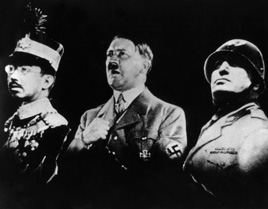
Europeans, however, were at war with Nazi Germany, officially beginning September 1st, 1939 when Hitler invaded Poland. But long before that, all three Axis powers—Germany, Japan, and Italy—had already begun aggressive expansions. Here’s a clear summary of pre-1939 military actions and occupations by each:
Germany – Nazi Expansion Before 1939
After Hitler came to power in 1933, Germany began defying the Treaty of Versailles and expanding its territory. Key steps:
Italy – Fascist Expansion Before 1939
Under Mussolini, Italy also pursued imperial ambitions:
Meanwhile in the East, Japan had its own plans of domination and expansion. Here is a summary:
Japan – Imperial Expansion Before 1939
Japan had been aggressively expanding in East Asia well before WWII officially began:
Japan’s aim was to dominate East Asia economically and militarily, creating a “Greater East Asia Co-Prosperity Sphere.”
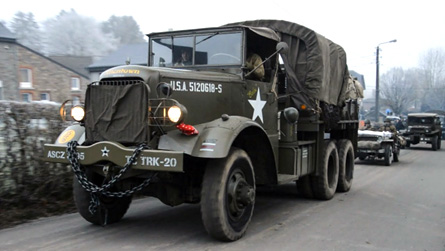 Truck drivers in the Combat Command Reserve (CCR) of the 47th Armored Infantry Battalion played a crucial role in supporting the battalion’s operations during World War II. Their responsibilities included transporting troops, supplies, and equipment, often under challenging and dangerous conditions. Here are some key aspects of their roles and contributions:
Roles and Responsibilities:
Challenges Faced:
Estimated total truck drivers in Europe: 150,000–175,000.
Training and Skills:
Impact on Operations:
Truck drivers in the CCR of the 47th Armored Infantry Battalion were unsung heroes whose efforts ensured that the battalion could operate effectively and achieve its objectives during World War II. Their work, often carried out under extreme conditions, was vital to the overall success of the unit.
🪖 Hürtgen Forest Campaign- Role of Trucks
Truck drivers in the Hürtgen Forest campaign (September–December 1944) faced some of the worst conditions of any transport personnel in Europe during World War II. Though not infantry, many were exposed to direct combat hazards, including artillery, mines, snipers, and brutal weather.
Truck drivers supporting the Hürtgen Forest campaign operated in near-frontline conditions, often under direct fire, and played a critical role in sustaining troops in one of the most brutal American offensives of the war.
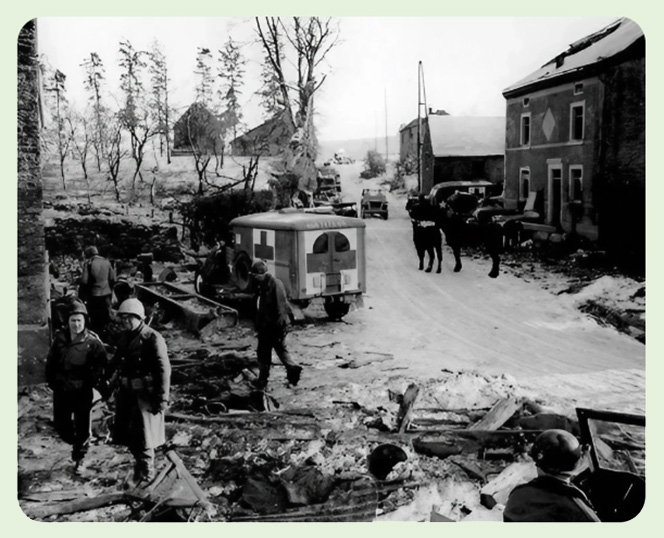
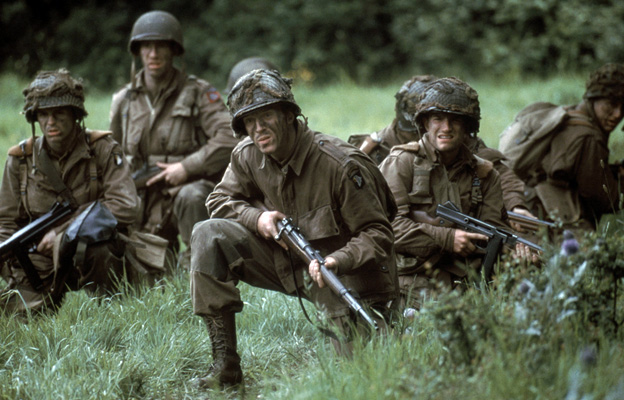
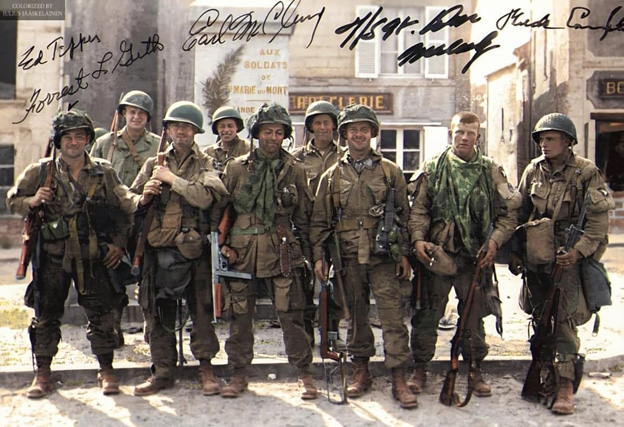
The 506th Parachute Infantry Regiment (PIR) of the 101st Airborne Division set up in the area surrounding Foy on 19 December 1944. The fighting was intense from the very first day. The 1st Battalion commander, Lieutenant-Colonel James LaPrade was killed in Noville, when the command post he was in, was hit by enemy shelling. The villages and surrounding area around Foy and Noville were repeatedly attacked by elements of the German 2nd Panzer Division and the 26th Volksgrenadier Division.
In difficult weather conditions on 13 January 1945, the 506th PIR attacked Foy, which was still occupied by German troops. Company ‘E’ and ‘I’ were tasked with leading the assault on the village under covering fire to definitively repel the enemy out, once and for all. Despite having to go house-to-house to clear out snipers, Foy was successfully captured with dozens of German soldiers taken prisoner.
The next day, German forces counterattacked. But, despite going back and forth, Foy ultimately remained in American hands. Also on 14 January, the 1st and 2nd Battalions of the 506th PIR were ordered to advance towards Noville and Cobru. Over the next few days, with the support from elements of the U.S. 11th Armored Division, the 101st Airborne Division gradually helped to liberate the territories north of Bastogne.
Despite the violence of the fighting, the village of Foy suffered no civilian casualties, unlike the neighbouring village of Noville where several inhabitants were executed in a massacre by German forces. On the other hand, military losses were significant in this area. After the fighting, a number of bodies were discovered and moved to the American and German military cemeteries, which were located at the exit of the village.
Traces of the battle are still visible in Foy. Visitors can still observe bullet holes in the walls of some of the old houses. A little further along is the famous Bois Jacques, where the 506th PIR foxhole positions were located.